SaaS
Mai-Pill
Android medication app: what's due now, with its photo, and one tap to confirm. No accounts, and the data never leaves your phone.
The brief
An app for not missing daily medication, built for the people who actually need it: older users and long-term treatments.
The problem
Health apps ask for an account, upload your medical data to a server and fill the screen with charts nobody knows how to read. They also fail exactly when there’s no signal.
And there’s a barrier before all that: if the interface is complicated, the people who need it most won’t use it.
The solution
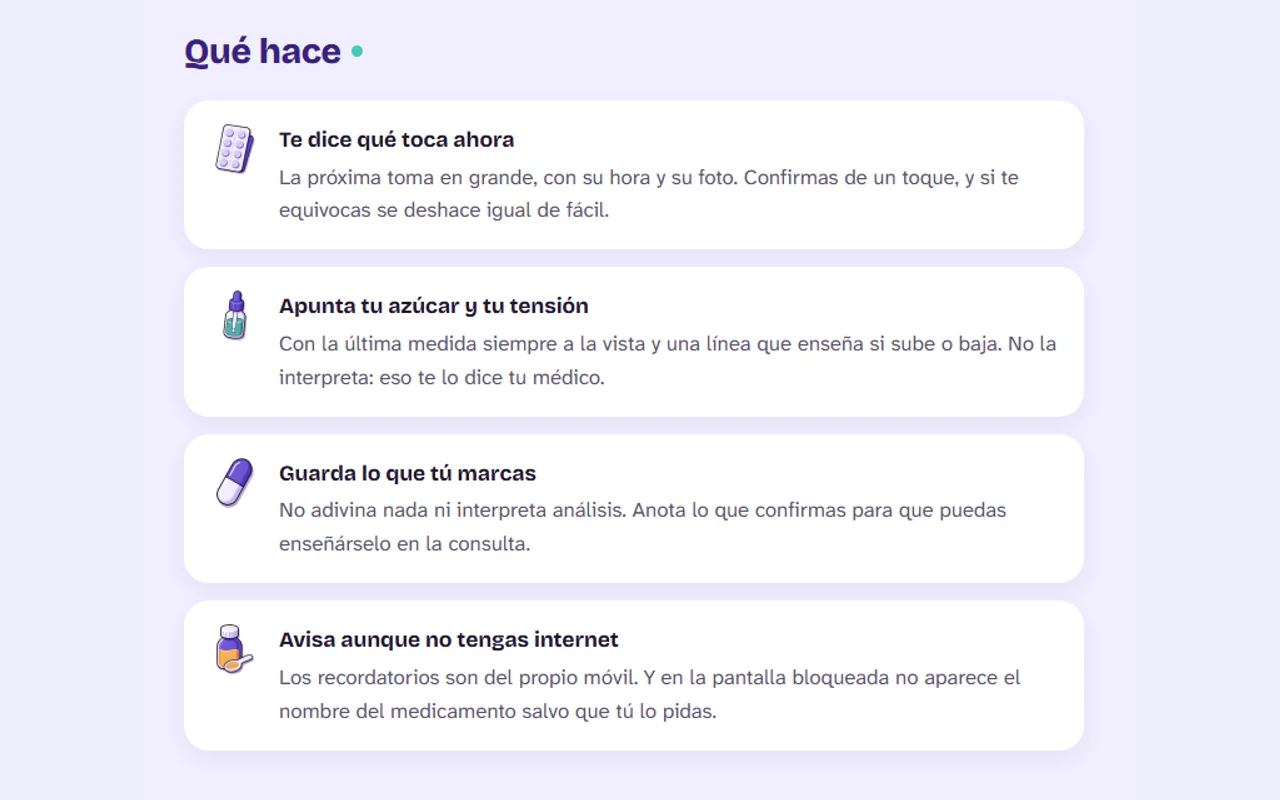
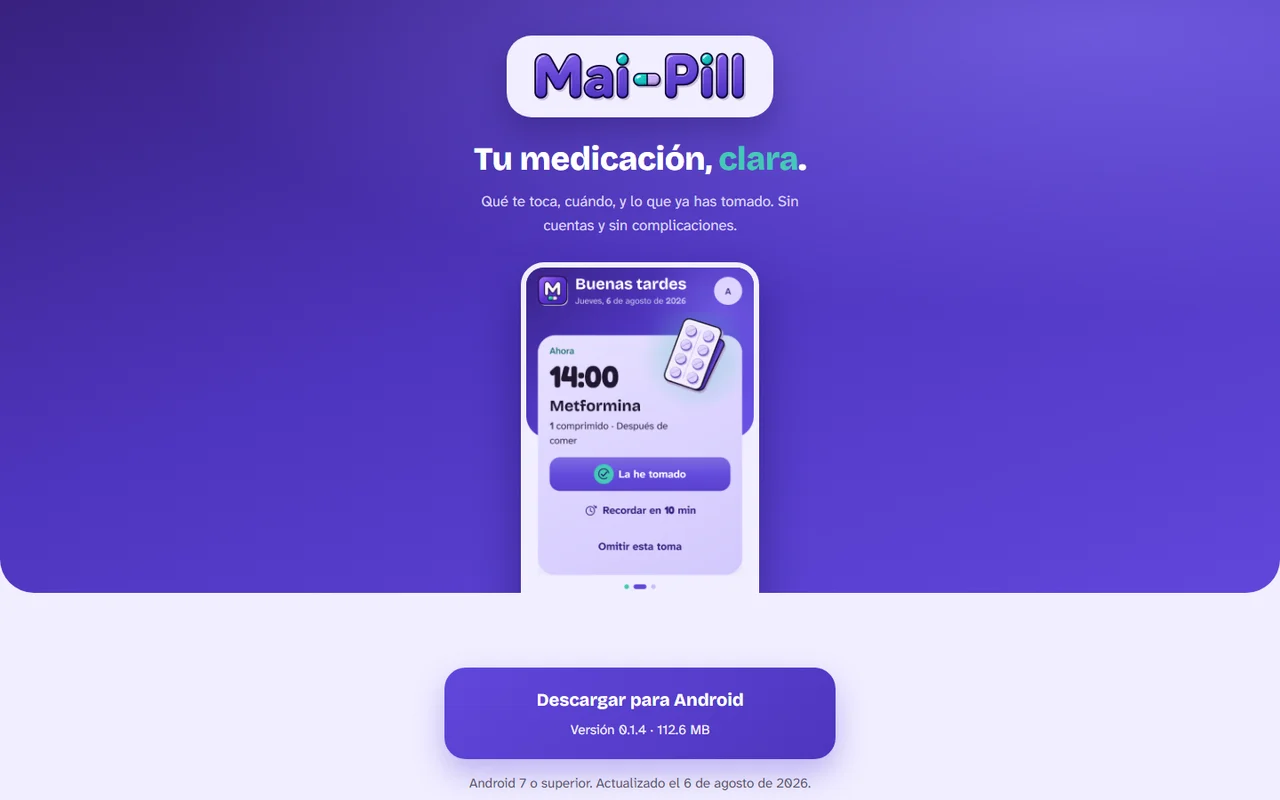
The home screen shows one thing: the next dose, large, with its time and a photo of the box. One tap to confirm, and just as easy to undo if you get it wrong.
Separately you can log blood sugar and blood pressure, with the latest reading always visible and a line showing whether it’s rising or falling. The app interprets nothing: it records what you confirm so you can show it to your doctor. That restraint is a design decision, not a limitation.
Everything lives on the device: medication, schedules and photos. No account, no cloud, no trace once uninstalled. Reminders are fired by the phone itself, so they work without internet, and the lock screen won’t show the medication name unless you ask it to.
Outcome
Published for Android as a direct download. An iOS version is on the way.
What’s coming
Google sign-in is in development. Changing phones today means entering the whole treatment again; with a backup, the medication, the schedules and the history are there from the first launch. It will also let you open the same history on another device, which helps when a relative shares the job of keeping track of doses.
It will be the recommended way to use it, but the no-account mode stays: anyone who wants their medical data on their phone alone can carry on exactly as before.